
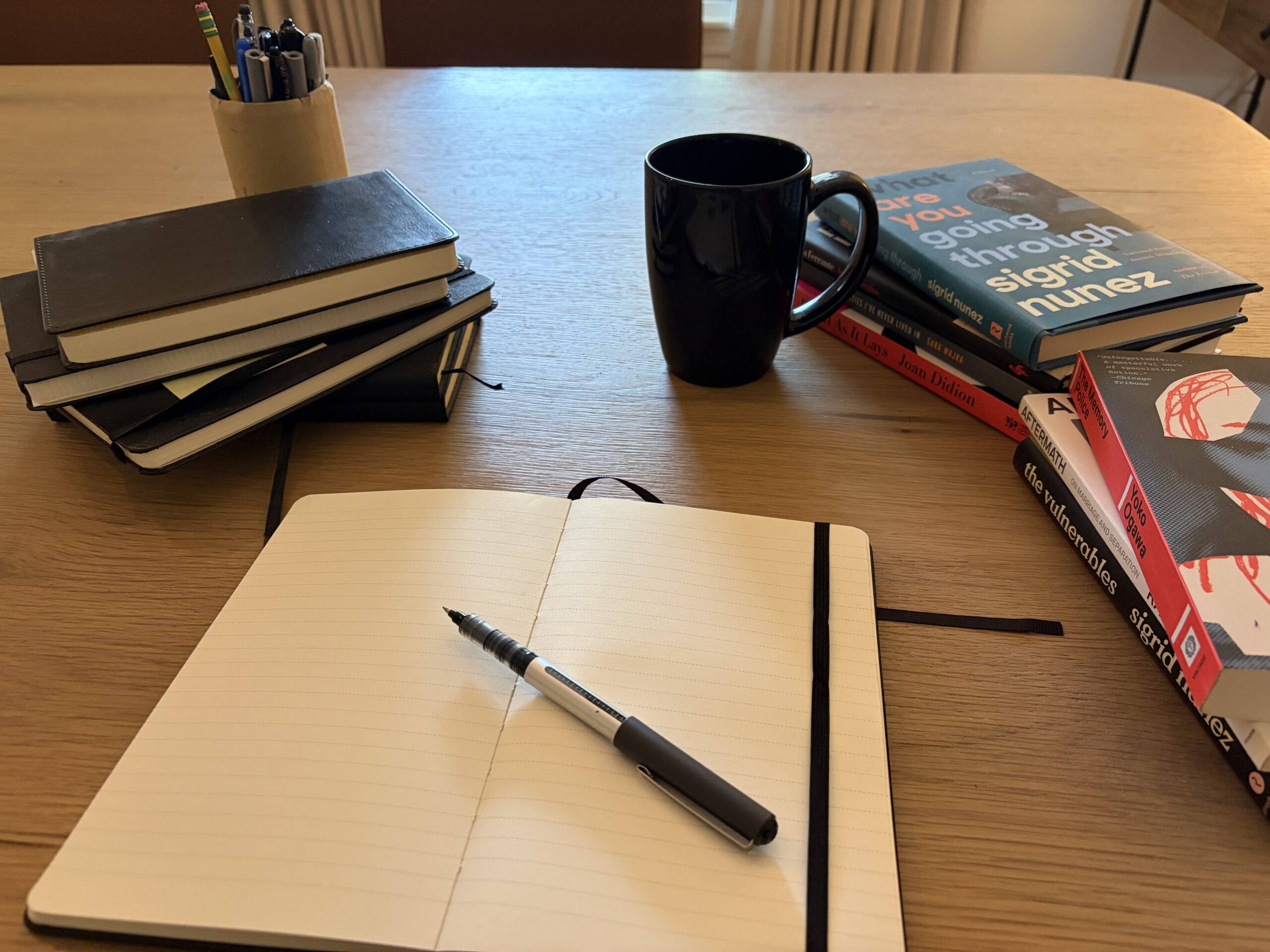

The Writer’s Desk features the desks and writing practices of Gemini Ink faculty, visiting authors, teaching artists, volunteers, students, interns, staff, partners and more. Receive new posts in your inbox by subscribing to our newsletter at bit.ly/geminiinknewsletter.
Join Andrew Porter on Thursdays, Feb 16 & 23, 2026, 6:30-8pm CST, via Zoom, for his lecture, Creating an Immersive Setting and Atmosphere. This course is open to writers of all genres and skill level, 18+. In this two-part intensive lecture, award-winning fiction author Andrew Porter will share practical techniques for building immersive settings and atmospheres, explore their vital role in fiction and nonfiction, and offer craft tools participants can practice on their own after the lecture.
Hi Andrew! We’re so excited to have you for our first literary lecture masters series of 2026. Thank you for taking the time to talk to us about your writing life.
Describe your first writing desk. How is it different (or not) from your current writing desk?
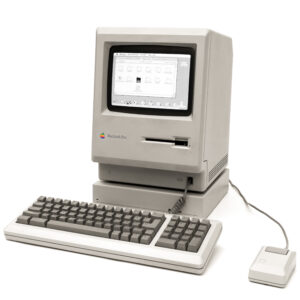 My first writing desk was an old wooden desk in my college dorm room, a desk I didn’t technically own. I wrote my first short stories at this desk on an old Macintosh Plus computer, the type of computer that would probably be considered a collector’s item these days. I later discovered that I wrote much better first drafts when I wrote longhand in a notebook, but at that time I was still writing on a computer, and I can remember very vividly just staring at that tiny box of a screen on my Mac Plus, trying to figure out what to write. I don’t think I kept anything else on that desk but my computer—I remember, even then, I liked my writing space neat—but I do know that I typically wrote at night back then, my room completely dark except for the desk lamp and the glowing white screen of my computer.
What is the one piece of writing advice that you value most?
It’s hard to choose one piece of advice that I value the most, but I will say that whenever I’m working on a novel, I always think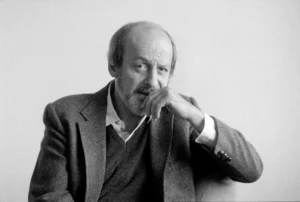 about E.L Doctorow’s famous advice about novel writing: Writing a novel is like driving a car at night. You can see only as far as your headlights, but you can make the whole trip that way & I don’t write from an outline, so it’s comforting for me to sometimes be reminded that I don’t need to be worrying about the entire story right now, just the small bit of story right in front of me.
Do you like things to be carefully planned out or do you prefer to just go with the flow? Does this also apply to how you lay out a story?
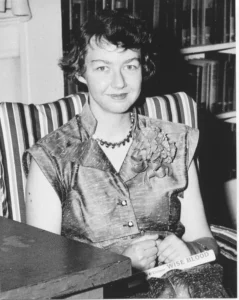 When it comes to my job as a professor, I tend to be very conscientious and detail-oriented, but in all other areas of my life, including my writing, I pretty much just go with the flow. I’ve always subscribed to Flannery O’Connor’s belief that writing is an act of discovery, and I’ve always approached any piece of fiction I’ve written in the same way she did, which is to say without any idea of what it was going to be about or where it would be headed or why I was writing it. To me, the fun part of writing fiction is the “not knowing.”
What habit do you have now that you wish you had started much earlier?
As I mentioned above, when I first started writing fiction in college, I wrote all of my stories on my computer. I would revise these stories on a single Word document and never save drafts along the way. I would just keep revising the same story over and over on the same document. At the time, I didn’t consider this a bad habit, but later, in graduate school, I began to realize that my classmates were all saving drafts of their stories along the way as separate documents, just in case they ever wanted to refer back to an earlier version of a particular passage or scene or in case they happened to “over-revise” a story. The benefit of doing this—of being able to refer back to earlier versions of stories—had never occurred to me before then, but it’s something that’s very much a part of my process now and something I talk to my students about a lot.
Does good writing result from best practices, magic, or a bit of both?
I would say a bit of both. Certainly, a routine is helpful, especially when you’re working on a longer project, like a novel, but there are always certain things in any piece of fiction that you can’t account for or explain, things that simply emerge in unexpected ways. Often, I think it’s simply a case of lucky timing—you’re listening to a podcast when someone suddenly says something that makes you realize how you want to end that tricky scene in your novel—but other times it’s harder to define. Other times, something just happens on the page, and it feels like the universe has just given you a little gift.
What is your next project?
My next project is a new short story collection set in San Antonio. I am thinking of this collection as the third part of a trilogy, or triptych, with my first two story collections, The Theory of Light and Matter and The Disappeared, being the first two parts.
If people want to learn more about your work, where should they go?
They can go to my website (www.andrewporterwriter.com) or to my author page on my publisher’s website.
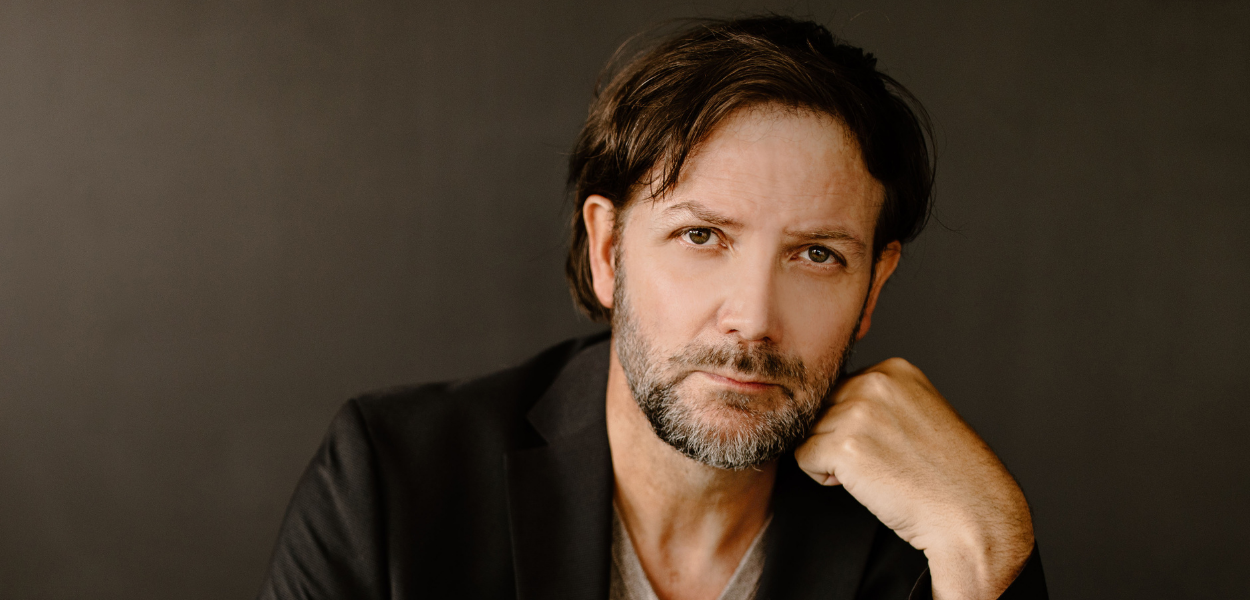
Andrew Porter is the author of four books, including the story collections The Disappeared (Knopf) and The Theory of Light and Matter (Vintage) and the novels In Between Days (Knopf) and The Imagined Life (Knopf, 2025). A graduate of the Iowa Writers’ Workshop, he has received a Pushcart Prize, a James Michener/Copernicus Fellowship, and the Flannery O’Connor Award for Short Fiction. His work has appeared in Best American Short Stories, One Story, Ploughshares, American Short Fiction, The Southern Review, and on Public Radio’s Selected Shorts. Currently, he teaches fiction writing and directs the creative writing program at Trinity University in San Antonio, Texas.